


Introduction
For entrepreneurs, investors, and expatriates planning to establish or expand a business in the UAE, Dubai’s free zones offer unique opportunities. Among them, the Dubai Airport Free Zone Authority (DAFZA / DAFZ) stands out for its logistics focus, prestige, and strategic location next to Dubai International Airport.
This guide explains every aspect of DAFZA company setup benefits, structures, licensing, costs, documents, compliance, tax, visas, and expansion tips so you can decide if DAFZA Company setup is the right base for your business.
What Is DAFZA / DAFZ
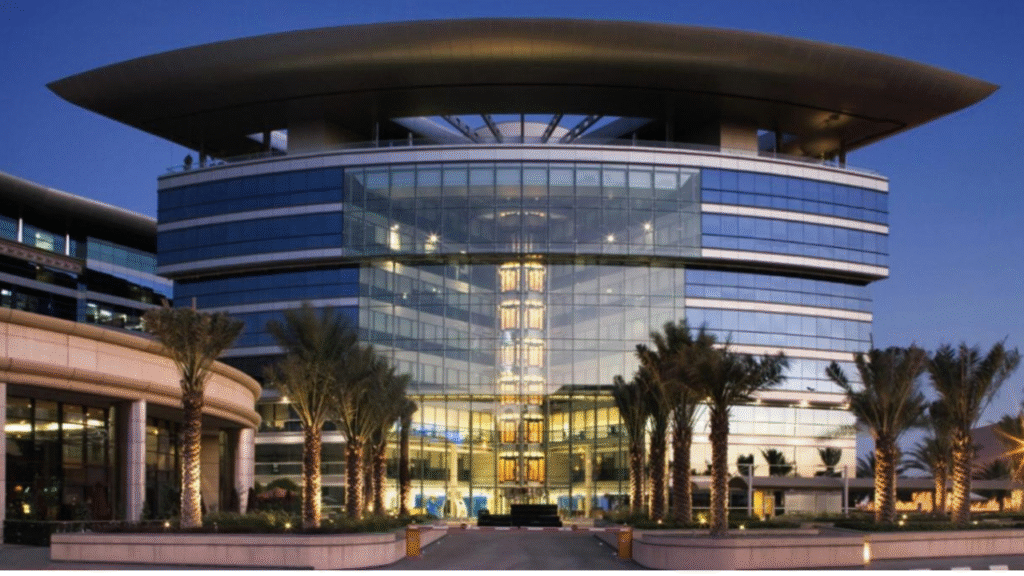
Established in 1996, DAFZA is one of Dubai’s most advanced free economic zones, hosting thousands of companies across aviation, logistics, IT, pharmaceuticals, trading, and light manufacturing. Today it operates under Dubai Integrated Economic Zones (DIEZ).
Its location beside DXB Airport provides unmatched connectivity for import-export, e-commerce, and air cargo enterprises. Modern facilities and pro-business policies make DAFZA Company setup a top choice for foreign investors and multinationals. Established in 1996, DAFZA has grown to host over 2,000 multinational companies and was ranked 1st globally by fDi Magazine’s Global Free Zones Awards for its strategic investor approach a track record of nearly 30 years supporting foreign businesses in the UAE.
Why Choose DAFZA Company setup
1. 100 % Foreign Ownership & No Local Sponsor
Foreigners can own 100 % of their company without a local partner.
2. Tax Incentives & Full Repatriation
Zero personal and corporate taxes and free repatriation of profits and capital make DAFZA a high return jurisdiction.
3. Strategic Location & Logistics Access
Direct airport proximity ensures fast cargo movement for trading and e-commerce operations.
4. World-Class Infrastructure
Modern offices, warehouses, industrial units, and plug and play spaces suit every business size.
5. Comprehensive Business Support
Visa, licensing, facility management, and legal services are handled within the zone for a smooth start.
6. Prestige and Global Credibility
A DAFZA address enhances trust among international partners and clients.
7. Customs & Trade Ease
Goods can be imported, stored, and re-exported with minimal customs duties.
Legal Structures in DAFZA Company setup
- Free Zone Company (FZCO / FZE) – Limited liability, 1 to 50 shareholders, ideal for SMEs.
- Branch Office – A foreign company extension legally linked to its parent.
- Public / Private Limited (PLC / Ltd) – For large scale or specialized operations.
Choose based on shareholders, liability, and growth objectives.
License Types of DAFZA Company setup
- Trade License – Import, export, distribution, and re-export.
- Service License – Professional, IT, marketing, or consulting services.
- Industrial License – Light manufacturing and packaging.
- General Trading License – Broad multi-category goods.
- E-Commerce License – Online sales and digital operations.
- Dual License – Operate both inside DAFZA and Dubai mainland via DET collaboration.
Aviation License – DAFZA’s Signature Offering
Unlike any other Dubai free zone, DAFZA offers a dedicated Aviation License built around its direct adjacency to Dubai International Airport (DXB). This license category covers:
- Aircraft component and spare parts trading – supplying airlines, MRO facilities, and ground handling companies with certified aerospace components
- Maintenance, Repair and Overhaul (MRO) support services – consulting, parts procurement, and project management for aircraft maintenance operations
- Ground handling and cargo logistics – supporting airline and freight operations directly from the zone
For businesses genuinely tied to the aviation supply chain, this license combined with DAFZA’s physical proximity to DXB is the single biggest reason to choose DAFZA over any other free zone.
Step-by-Step Company Formation
- Plan and Check Eligibility – Select activities and license; minimum share capital AED 1,000.
- Submit Applications – Provide passport copies, MoA/AoA, board resolution, and business plan.
- Lease Office or Warehouse – A physical premise is mandatory.
- Receive Final Approval & License – Once approved, you get registration certificates and DAFZA access.
- Visa & Immigration – Apply for investor and employee visas and establishment cards.
- Commence Operations – Open bank account and begin trading.
Typical timeline: 14 to 21 working days, broken down as:
Visa and establishment card: 5–10 working days
Initial approval: 3–5 working days
Legal documentation and lease signing: 5–7 working days
License issuance: 7–14 working days
Cost Overview (AED) for DAFZA Company setup
| Item | Typical Range | Notes |
|---|---|---|
| License fee | 15,000 – 25,000 | Up to 3 activities included |
| Registration fee | 7,000 | One-time setup |
| Office lease | 25,000 – 80,000 + | Depends on size |
| Visa cost per employee | 3,000 – 5,000 | 3-year validity |
| Smart Desk packages | 41,000 – 45,000 all-inclusive | Ideal for startups |
For businesses that don’t require direct airport adjacency general trading or service companies, for example Lower-cost alternatives such as IFZA (from AED 12,500) or Meydan (from AED 18,000) may be more commercially appropriate. DAFZA’s premium pricing is best justified for aviation, aerospace, and logistics businesses that benefit directly from DXB proximity.
Note- Prices vary by license, facility, and services. Always request a custom quotation before open a DAFZA Company setup
DAFZA Company Setup – Renewal and Ongoing Costs
Annual License Renewal
License renewal fees typically mirror your original license cost (AED 15,000–25,000 depending on activity type), payable annually to maintain your DAFZA Company setup in good standing. Renewal must be processed before your license expiry date. DAFZA imposes penalties for late renewal, and a lapsed license can disrupt banking relationships and visa validity for your team.
Office and Facility Renewal
Lease renewals for your office, Smart Desk, or warehouse space follow market rates and may increase year-over-year. Budget for a potential 5–10% increase in facility costs at each renewal cycle, particularly if you started with a promotional first-year rate.
Visa Renewal Cycles
Investor and employee visas typically carry 2–3 year validity. Factor in renewal costs of AED 3,000–5,000 per visa, plus medical testing and Emirates ID renewal fees, when planning your team’s long-term budget.
Audit and Compliance Costs
Maintaining Qualifying Free Zone Person (QFZP) status requires annual audited financial statements. Budget AED 5,000–15,000 annually for audit fees depending on your company’s size and transaction complexity this is a non-negotiable cost for any DAFZA Company setup that wants to preserve its 0% corporate tax benefit.
Immigration and Establishment Card Renewal
Your company’s establishment card (the foundation for all visa applications) requires periodic renewal alongside your license. Missing this renewal can halt new visa processing entirely, so align it with your annual license renewal calendar.
Planning your DAFZA Company setup budget beyond year one is just as important as the initial cost breakdown.
When DAFZA Company Setup May Not Be the Right Fit
DAFZA is a premium jurisdiction, and that premium isn’t the right fit for every business model. If your company doesn’t require aviation, cargo, or logistics proximity for example, a general consultancy, digital marketing agency, or small trading operation the facility and license costs here may outweigh the benefit. In these cases, lower-cost zones like IFZA or Meydan (see cost comparison above) typically offer a more commercially sensible DAFZA Company setup alternative without sacrificing 100% foreign ownership or tax benefits. DAFZA’s real value is concentrated in businesses that can directly leverage DXB adjacency if that’s not your model, it’s worth honestly weighing the premium against your actual operational needs before committing.
Documents Required for DAFZA Company setup
For FZCO/FZE:
- Application form & business plan
- Passports of shareholders and managers
- CV and specimen signatures
- MoA/AoA and board resolution
- Proof of address and bank reference
- NOC (if UAE resident)
- Lease agreement
- External approvals (if regulated activity)

For Branches:
- Parent company certificate of incorporation
- Board resolution to form branch
- Power of attorney and manager appointment
- Audited financial statements
- Attested and translated corporate documents
Corporate Tax in DAFZA
Free zone entities can maintain a 0 % corporate tax rate if they qualify as Qualifying Free Zone Persons (QFZP).
To retain this status, a company must show economic substance in the zone, maintain audited accounts, and limit mainland transactions to approved qualifying activities.
Non-qualifying income is subject to the federal 9 % rate.
Large multinationals may be subject to the 15 % Domestic Minimum Top-Up Tax under global tax rules.
Consult your tax advisor to structure revenues correctly and keep separate books for qualifying and non-qualifying income.
VAT and Customs Obligations
- VAT Registration: Mandatory once taxable supplies or imports reach AED 375,000; voluntary at AED 187,500.
- Customs Client Code: Required for import/export through Dubai Customs.
- Goods stored in the zone enjoy duty suspension until released to the mainland.
- Prepare a clear VAT map of all transactions to avoid misfiling.
Compliance Checklist: UBO, ESR & AML
- UBO Register: Keep beneficial ownership records updated and file changes promptly.
- Economic Substance Regulations (ESR): File notifications and reports if you conduct a relevant activity such as distribution, holding, or finance.
- AML/CTF: Businesses handling company formation, real estate, or precious metals must register on goAML and maintain KYC controls.
Maintain a governance calendar for renewals and filings.
Bank Account Opening in DAFZA
Prepare a comprehensive bank pack including:
- License, MoA, lease, board resolution
- UBO structure chart and sample invoices
- Proof of office and staff contracts
- KYC and AML policies
Be ready to explain your DAFZA Company setup business model and expected transactions. Banks favor companies with clear substance and transparent fund flows. Companies in DAFZA have access to major UAE banks including Emirates NBD, Mashreq Bank, ADCB, and FAB. Average account opening takes around 14 days, with an approval probability of approximately 92% when documentation is complete and business substance is clearly demonstrated.
Visa Strategy and Immigration
Visa quotas depend on office size and facility type.
Typical path: establishment card → immigration card → investor visa → staff visas.
Investor Visas: 2–3 years valid.
Golden Visa: available for qualifying investors or specialists for 5–10 years.
Plan visa timelines with your PRO to avoid onboarding delays.
One Freezone Passport: Multi-Zone Expansion (DAFZA Company setup)
Dubai’s “One Freezone Passport” lets licensed companies operate across participating free zones without duplicate licenses.
This allows a DAFZA firm to retain its airport hub while using storage or specialized facilities in other zones under a single framework ideal for growth and cost efficiency.
Sector Specific Approvals
| Sector | External Authority | Trigger |
|---|---|---|
| Healthcare & Pharma | MOHAP / DHA | Import & storage |
| Food & Beverage | Dubai Municipality | Labeling & storage |
| Telecom / IT | TDRA | Equipment or network use |
| Aviation | GCAA / Airport Ops | Ground services |
| Education / Training | KHDA | Courses & institutes |
| Financial / FinTech | CBUAE / DFSA | Regulated services |
Use official activity names to avoid license revisions later.
Leasing and Facility Insights
- Smart Desk: Best for startups, limited visa quota.
- Executive Office: Professional image, higher visa allowance.
- Warehouse / Industrial Units: For logistics and assembly.
Allow 2–6 weeks for fit-out approvals and budget for service charges, parking, and IT infrastructure. An Executive Office, by contrast, better suits companies planning to scale their team within the first 12–18 months, or those meeting clients in person regularly where a professional office presence matters for credibility. Executive offices typically unlock higher visa quotas, making them the more practical choice if your business plan includes hiring beyond 2–3 employees in year one.
For logistics, e-commerce, or aviation-support businesses handling physical goods, a Warehouse or Industrial Unit is often unavoidable regardless of budget preference. DAFZA does not permit virtual or zero-office licenses for these activity types, meaning physical premises are mandatory from day one.
Choosing the right facility type from the outset avoids costly mid-year upgrades and ensures your DAFZA Company setup can scale smoothly as your team and operations grow.
E-Commerce and Air Cargo Synergy
DAFZA’s location enables same day shipping through DXB.
Set up inventory inside the zone and partner with local couriers for final mile delivery.
Track returns and re-exports to claim customs reliefs and avoid VAT leakage.

Risk & Governance Common Founder Errors
Mixing taxable and exempt income without records Without clean separation, you risk losing Qualifying Free Zone Person (QFZP) status entirely, converting your whole income to the 9% rate rather than just the non-qualifying portion.Ignoring UBO/ESR deadlines Missed Economic Substance Regulation filings can trigger penalties starting at AED 20,000 and escalate with repeated non-compliance, alongside reputational risk with banking partners.Wrong VAT coding on samples or transfers Misclassifying intra-zone transfers or sample shipments is one of the most common triggers for FTA audits among free zone companies handling physical goods.
Weak banking documentation Incomplete KYC packs are the single biggest cause of delayed or rejected corporate account applications, even for companies with a valid license already in hand.Activity name mismatch with license listsUnderestimating fit-out lead timesMissing customs inspection SOPsLetting establishment cards expireSkipping KYC on distributorsForgetting annual audit (for QFZP status)
DAFZA Company setup vs Other Free Zones
| Feature | DAFZA | DMCC | JAFZA | Silicon Oasis |
|---|---|---|---|---|
| Airport access | Excellent | Moderate | Port-based | City centre |
| Facility cost | Premium | Competitive | Warehousing | Affordable |
| Ideal for | Trade, e-commerce, aviation | Commodities, fintech | Manufacturing | Tech, R&D |
| Prestige | Very high | Strong | Industrial | Innovative |
| Regulatory ease | Streamlined | Modern | Traditional | Sector-based |
Choose your DAFZA Company setup based on logistics needs and target market. Each of these zones serves a different founder profile. DAFZA Company setup makes the most sense for aviation, logistics, and e-commerce businesses that genuinely benefit from direct airport access and premium positioning the cost premium is justified by real logistical advantage, not just prestige.
DMCC suits commodities traders and fintech companies drawn to its large, established community and competitive facility costs. JAFZA is built for manufacturing and heavy industry businesses needing port access and large scale warehousing. Silicon Oasis fits tech and R&D-focused founders who prioritize a city-centre location and innovation-driven ecosystem over logistics infrastructure. Choosing correctly from day one avoids the cost and disruption of relocating your license later.
Frequently Asked Questions
Q- Do DAFZA companies pay corporate tax?
A- Qualifying Free Zone Persons enjoy 0 % on eligible income and 9 % on non-qualifying income.
Q-Is VAT registration mandatory?
A-Yes, once turnover reaches AED 375,000; voluntary at AED 187,500.
Q- Can a DAFZA company trade in mainland UAE?
A- Yes, via a dual license or through a registered local distributor.
Q- How many visas can I get?
A- It depends on office size and DAFZA quota rules.
Q- What’s the minimum capital?
A- AED 1,000 with shares of AED 1,000 each.
Q- Do I need audited accounts?
A- Yes , annual audits are required to maintain QFZP status and bank compliance.
How to Register for DAFZA Company setup
- Choose business activities and license.
- Select legal structure (FZCO/FZE/Branch).
- Reserve trade name.
- Submit application and KYC documents.
- Lease premises inside DAFZA.
- Receive license and registration certificate.
- Obtain establishment and immigration cards.
- Apply for visas and open bank account.
- Register for VAT if required.
- Begin operations and maintain compliance.
Next Steps
DAFZA combines strategic location, tax advantages, and world-class infrastructure, making it one of Dubai’s most prestigious free zones. Its proximity to the airport and strong regulatory framework support businesses in trade, logistics, aviation, and e-commerce.
While setup costs are higher than some zones, the reputation and logistical efficiency often justify the investment. With proper planning and expert guidance, your DAFZA business can be operational in weeks and positioned for regional growth.
Ready to Launch your DAFZA Company setup?
A lapsed DAFZA Company setup license can create serious complications for both banking access and visa validity. Getting facility decisions right early in your DAFZA Company setup journey saves both money and disruption later. Planning your DAFZA Company setup budget beyond year one is just as important as the initial cost breakdown. A well-planned DAFZA Company setup today lays the foundation for smooth renewals, compliance, and growth in the years ahead.
At Aspira Business Setup, we simplify the entire process from licensing and bank account opening to visa issuance and compliance management. A well-planned DAFZA Company setup today lays the foundation for smooth renewals, compliance, and growth in the years ahead. Contact Aspira Dubai today to get a transparent cost breakdown, custom license advice, and bank-ready documentation within five business days.
Start your DAFZA Company setup journey today and connect your business to the world through Dubai Airport Free Zone.
Call us at +971 56 406 6546
Visit: www.aspiradubai.com
Email: info@aspiradubai.com