

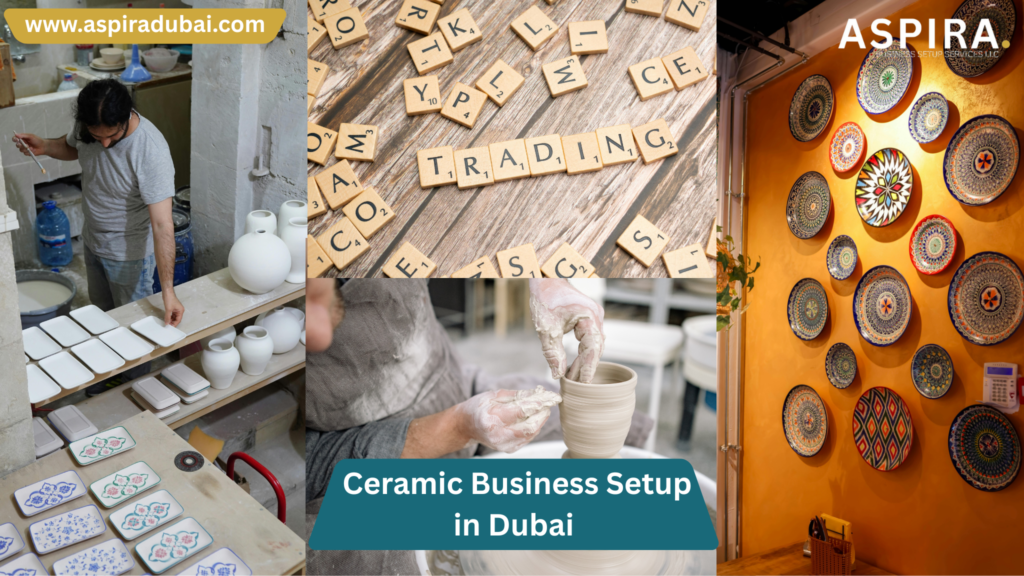
Dubai’s construction boom, luxury interior market, and growing appetite for artisanal handmade products have made ceramics one of the more versatile sectors to enter in the UAE — spanning everything from bulk tile trading and sanitary ware distribution to boutique pottery studios and handmade ceramic brands. A Ceramic Business Setup in Dubai can look very different depending on which of these segments you’re targeting, and the license type, costs, and facility requirements shift significantly between them.
This guide covers exactly what a Ceramic Business Setup in Dubai involves in 2026 — the real license categories, actual costs by business model, and the practical differences between running a trading operation versus a pottery studio or handmade brand.
Why Ceramics Is a Strong Market in Dubai
Dubai’s luxury villas, hotels, restaurants, and commercial towers create sustained demand for ceramic tiles, porcelain fittings, and decorative products, while the region’s own manufacturing base — including established regional players like RAK Ceramics — signals a mature, credible industry rather than a niche import trade. Beyond construction, Al Quoz and Dubai Design District have become genuine hubs for creative ceramic studios and artistic workshops, and the rise of e-commerce has opened a parallel path for online and handmade ceramic brands that didn’t exist a decade ago — all of which make a Ceramic Business Setup in Dubai genuinely viable across very different entrepreneur profiles.
Choosing Your Business Model First
Before licensing, a Ceramic Business Setup in Dubai needs a clear business model decision, since each one carries a genuinely different cost structure and target client:
Ceramic Trading — Importing and reselling tiles, sanitary ware, and porcelain products. This is the most common Ceramic Business Setup in Dubai model and typically the most capital-efficient entry point, since it doesn’t require manufacturing equipment.
Ceramic Manufacturing — Producing ceramic products locally using kilns, molds, and raw materials. Requires industrial approvals, a larger facility, and significantly more upfront capital than trading.
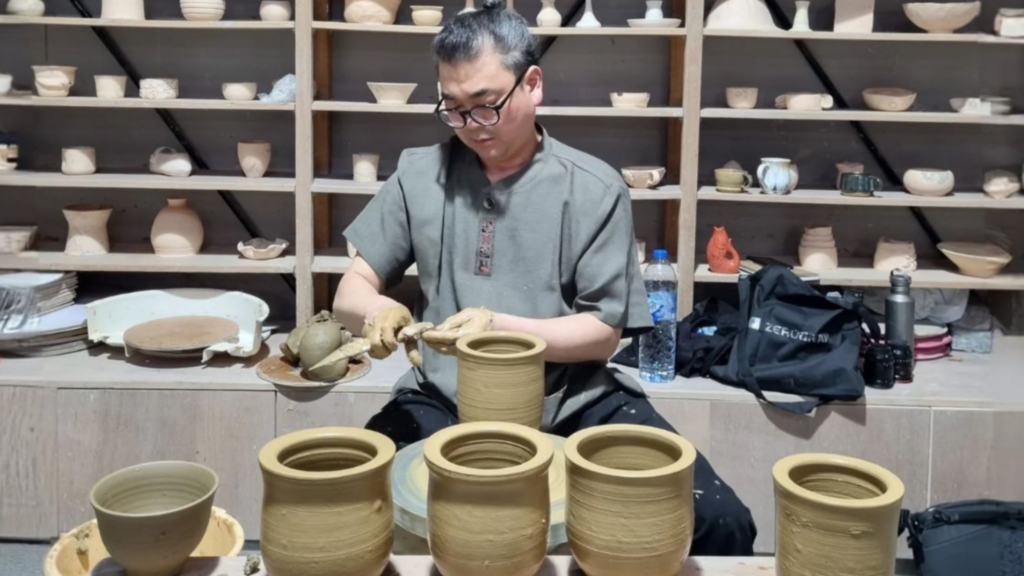
Pottery Studio — Offering ceramic-making workshops, classes, and artistic sessions to the public. A creative, B2C business model with lower entry costs but a completely different client base from trading or manufacturing.
Handmade Ceramic Brand — Selling customized, artisanal ceramic products largely through social media and online platforms rather than a physical showroom.
Ceramic Café Concept — A hybrid model combining a café with a pottery painting or crafting experience, currently one of the faster-growing niches in Dubai’s experience-driven retail scene.
License Types for a Ceramic Business Setup in Dubai
The correct license for a Ceramic Business Setup in Dubai depends entirely on your chosen business model:
- Commercial License — Covers ceramic and porcelain trading, tile trading, and sanitary ware trading; the standard choice for import/resale businesses.
- Industrial License — Required for local manufacturing of ceramic products, and typically requires a physical office as a mandatory condition alongside additional facility approvals.
- Professional/Creative License — Covers pottery studio activities, art workshops, and ceramic-making classes, often licensed under creative or educational activity codes rather than standard commercial trading.
- E-commerce License — For businesses selling exclusively through online platforms rather than a physical retail or trading premises.
Mainland vs. Free Zone for a Ceramic Business Setup in Dubai
| Feature | Mainland | Free Zone |
|---|---|---|
| Trade Across UAE | Yes | Limited without a distributor |
| Government Projects | Eligible | Usually restricted |
| Warehouse Options | Wide availability | Limited in some zones |
| Import & Export | Strong | Excellent for international trade |
| Ownership | 100% foreign ownership available | 100% foreign ownership |
For ceramic trading targeting the local Dubai/UAE market, mainland is generally the better fit, since free zone companies typically need a mainland distributor to sell directly across the emirate. For businesses focused primarily on import/export and international trade, free zones like Jebel Ali Free Zone (JAFZA) or Dubai Multi Commodities Centre (DMCC) offer meaningful customs and logistics advantages.
Step-by-Step Process
- Decide your business activity — trading, manufacturing, pottery studio, retail, or e-commerce — since approvals and costs differ significantly by activity.
- Select your jurisdiction — mainland, free zone, or industrial zone based on your target market.
- Reserve your trade name, following UAE naming conventions.
- Obtain initial approval, confirming the government has no objection to your proposed activity.
- Secure your space — a showroom and warehouse for trading, a manufacturing facility for production, or a studio space for pottery/workshop activities.
- Apply for your business license and submit required documentation.
- Process visas for investors and employees.
- Open a corporate bank account for imports, supplier payments, and customer transactions.
Real Cost of a Ceramic Business Setup in Dubai
| Expense | Estimated Cost |
|---|---|
| Trade license (commercial) | AED 12,000–25,000 |
| Industrial license (manufacturing) | AED 20,000–30,000+ |
| Office or warehouse | AED 15,000–80,000 |
| Investor visa | AED 3,500–7,000 |
| Employee visa | AED 4,000–7,500 |
| Pottery/ceramic equipment (kilns, wheels, molds) | AED 20,000–50,000+ |
| Import and logistics | Varies by shipment size |
A small pottery-focused Ceramic Business Setup in Dubai typically requires meaningfully less investment than a manufacturing facility, since the equipment and facility standards differ substantially — a studio needs kilns and pottery wheels, while manufacturing requires industrial-scale kilns, molds, and often a larger warehouse footprint entirely.
Pottery Studio License Requirements
For entrepreneurs specifically pursuing a pottery studio license in Dubai, the licensing path differs from standard ceramic trading. Pottery and workshop activities are typically licensed under creative or educational activity codes, and the space requirements focus on studio layout — work areas, drying racks, kiln placement, and customer seating for classes — rather than warehouse or showroom space. This makes pottery studios a genuinely lower-barrier entry point into the ceramics sector compared to trading or manufacturing, which is part of why this segment has grown quickly among creative entrepreneurs and women-led businesses in Dubai specifically.
Best Locations for a Ceramic Business Setup in Dubai
- Al Quoz — the established hub for creative studios and artistic ceramic workshops
- Dubai Design District (D3) — strong fit for premium, design-forward ceramic brands
- Ras Al Khor, Al Qusais, Dubai Investment Park — industrial zones suited to trading warehouses and manufacturing facilities
- Dragon Mart area — relevant for bulk trading businesses given its established trading ecosystem
Importing Ceramic Products
Most trading-focused Ceramic Business Setup in Dubai operations import from established manufacturing regions including China, Italy, Spain, India, and Turkey. Importers must comply with Dubai Customs procedures and, depending on the product category, may need additional approvals from Dubai Municipality — particularly for sanitary ware and products with specific safety or quality standards under the Emirates Authority for Standardization and Metrology.
Related Authorities
A Ceramic Business Setup in Dubai may involve several government bodies depending on your activity:
- Department of Economy and Tourism — issues the commercial or industrial license
- Dubai Municipality — product category approvals, particularly for sanitary ware
- Dubai Customs — import/export compliance
- Emirates Authority for Standardization and Metrology — product quality and safety standards
- Ministry of Industry and Advanced Technology — relevant for manufacturing-scale operations
- Jebel Ali Free Zone / DMCC / Dubai Airport Freezone — free zone licensing options for trading-focused structures
Emerging Trends Worth Building Into Your Business Plan
Beyond traditional tile trading, several genuine shifts are reshaping the sector: luxury developers increasingly favor designer ceramic finishes and textured wall tiles over standard products; sustainability-conscious buyers are creating real demand for eco-friendly, energy-efficient ceramic production; and personalized ceramic products — corporate gifts, wedding favors, branded restaurant tableware — have become a meaningful revenue stream for smaller handmade brands rather than a niche side activity.
Ceramic experience studios, where customers paint or create their own pottery, are also gaining genuine traction with families, tourists, and corporate event bookings — a hybrid model that blends retail, entertainment, and workshop revenue under one roof. For entrepreneurs weighing which trend to prioritize, sustainability and personalization currently offer the clearest differentiation, since most established trading businesses still compete primarily on price and bulk volume rather than design or environmental credentials.
A smaller Ceramic Business Setup in Dubai that leans into eco-friendly production or highly customized products can often carve out a defensible niche against larger, lower-margin trading operations, even without matching their scale or inventory depth.
Common Challenges of Ceramic Business Setup in Dubai
- Product breakage during transport — particularly relevant for imported tile and porcelain trading
- Import delays — customs processing and shipping timelines require realistic buffer planning
- High machinery costs — a significant barrier specifically for manufacturing-scale operations
- Competition from low-cost suppliers — quality and branding differentiation matter more as the market matures
- Inventory and warehouse management — particularly for bulk trading operations carrying significant stock

Marketing a Ceramic Business Setup in Dubai
Marketing strategy for a Ceramic Business Setup in Dubai differs significantly by business model. Trading businesses rely heavily on interior designer collaborations, real estate partnerships, and trade exhibitions to reach B2B buyers, while handmade ceramic brands and pottery studios lean into Instagram and Pinterest, where visual, aesthetic products convert far better than they would through traditional advertising. Google SEO and a well-built e-commerce presence matter across every model, but the content and platform mix should match your specific audience rather than applying one generic marketing approach across a fundamentally different business.
Influencer collaborations have become particularly effective for handmade and customized ceramic brands specifically, since Dubai’s design-conscious consumer base responds strongly to authentic, visually compelling product storytelling over conventional advertising.
Technology Changing the Ceramics Industry
Digital printing technology now allows a Ceramic Business Setup in Dubai to offer customized patterns and textures that would have required extensive manual work a decade ago, opening real opportunities for smaller brands to compete on design rather than just price. Some suppliers serving the interior design and luxury property market are also adopting AI-powered visualization tools, letting clients preview ceramic tiles or fixtures in their actual space before committing to a purchase — a meaningful differentiator when competing for high-value villa or hotel projects.
For direct-to-consumer brands, e-commerce and social commerce — Shopify stores, Instagram shops, WhatsApp Business catalogs — have become genuine primary sales channels rather than a supplementary add-on to a physical showroom, particularly for handmade and customized product lines.
Financial Planning and Tax Compliance
Beyond setup costs, a Ceramic Business Setup in Dubai must budget for ongoing Corporate Tax compliance — a 9% rate applies once annual profit exceeds AED 375,000 — along with VAT registration once taxable turnover crosses the mandatory threshold. Trading businesses carrying significant imported inventory should also factor customs duties into their pricing models from the outset, since these costs directly affect margin on bulk shipments and are easy to underestimate when budgeting purely around the license and setup fees.
Opportunities for Creative and Women Entrepreneurs
Within a Ceramic Business Setup in Dubai, the pottery studio and handmade ceramic segment specifically has created meaningful openings for women entrepreneurs and creative founders who might not have the capital for a trading or manufacturing setup. Homegrown pottery brands, online ceramic stores, and artistic workshop businesses generally carry lower startup costs than trading or manufacturing, and Dubai’s supportive digital economy makes it genuinely feasible to launch and scale a niche ceramic brand with a comparatively modest initial investment — a meaningfully different risk profile from the capital-intensive trading and manufacturing side of the industry.
Building Supplier and Distribution Relationships
For a trading-focused Ceramic Business Setup in Dubai, supplier reliability matters as much as licensing itself. A Ceramic Business Setup in Dubai built around imported tiles or sanitary ware depends on consistent quality control from overseas manufacturers, predictable shipping timelines, and clear agreements on breakage and defect liability during transport — since ceramic products are inherently fragile and damage during shipping is one of the more common operational headaches in this sector. Building relationships with two or three reliable suppliers across different regions, rather than depending entirely on one source, reduces the risk of stockouts when a single supplier faces production delays or shipping disruptions.
On the distribution side, a Ceramic Business Setup in Dubai supplying interior designers, contractors, and property developers benefits from maintaining a well-stocked showroom or sample library, since B2B buyers in this sector typically want to see and touch finished products before committing to large orders — a meaningfully different sales process from the direct-to-consumer, largely online sales cycle that handmade and pottery studio brands rely on.

Legal Considerations
A Ceramic Business Setup in Dubai involved in manufacturing or bulk trading should have product liability insurance in place, particularly for sanitary ware and structural tile products where installation defects could carry liability exposure. Trademark registration is also worth prioritizing early for handmade and branded ceramic lines — in a highly visual, design-driven market, protecting your brand identity becomes considerably harder once a competitor has built recognition around similar packaging or product styling.
Why Work With Aspira Business Setup Services
Aspira Business Setup Services LLC manages the complete Ceramic Business Setup in Dubai process from choosing the right license type for your specific business model, whether trading, manufacturing, or a pottery studio, to coordinating mainland or free zone registration, visa processing, and warehouse or studio space arrangements. Our team works directly with the Department of Economy and Tourism, Dubai Municipality, and relevant free zone authorities so entrepreneurs can move from concept to a fully licensed, operational business without unnecessary delays.
FAQs on Ceramic Business Setup in Dubai
Q: How much does a Ceramic Business Setup in Dubai cost?
A: Costs typically start from AED 12,000 for a basic trade license and increase depending on office space, visas, equipment, and business activity manufacturing operations generally cost significantly more than trading or studio setups.
Q: Can I get a pottery studio license in Dubai?
A: Yes — pottery studios and ceramic workshops are typically licensed under creative or educational activity codes and have become increasingly popular in Dubai.
Q: Do I need a warehouse for ceramic trading?
A: Yes, most ceramic trading businesses require warehouse or storage facilities, particularly for bulk inventory like tiles and sanitary ware.
Q: Can foreigners fully own a Ceramic Business Setup in Dubai?
A: Yes, 100% foreign ownership is available across most ceramic business activities in both mainland and free zone jurisdictions.
Q: Is ceramic trading profitable in Dubai?
A: Yes — strong construction, interior design, and hospitality demand support healthy margins, particularly for imported premium products and customized handmade ceramics.
Q: Should I choose mainland or free zone for my Ceramic Business Setup in Dubai?
A: Mainland generally suits businesses trading directly across the UAE market, while free zones offer stronger advantages for international import/export-focused operations.
Q: What’s the difference between a trading license and an industrial license for ceramics?
A: A commercial/trading license covers buying and reselling ceramic products, while an industrial license is required for local manufacturing and comes with additional facility and approval requirements.
Q: Which areas in Dubai are best for a ceramic business?
A: Al Quoz and Dubai Design District suit creative studios and design-forward brands, while Ras Al Khor, Al Qusais, and Dubai Investment Park suit trading warehouses and manufacturing facilities.
Q: Do I need Dubai Municipality approval for ceramic products?
A: It depends on the product category — sanitary ware and certain fittings typically require additional Municipality and Emirates Authority for Standardization and Metrology approvals beyond the standard trade license.
Q: Can a pottery studio and a ceramic trading business operate under the same license?
A: Generally no — pottery studio and workshop activities are typically licensed under creative or educational activity codes, distinct from the commercial trading license used for tile and porcelain trading, so most businesses need to choose one primary activity or apply for both separately.
Contact Us
Aspira Business Setup Services LLC Phone: +971 56 406 6546 Email: info@aspiradubai.com Website: www.aspiradubai.com