

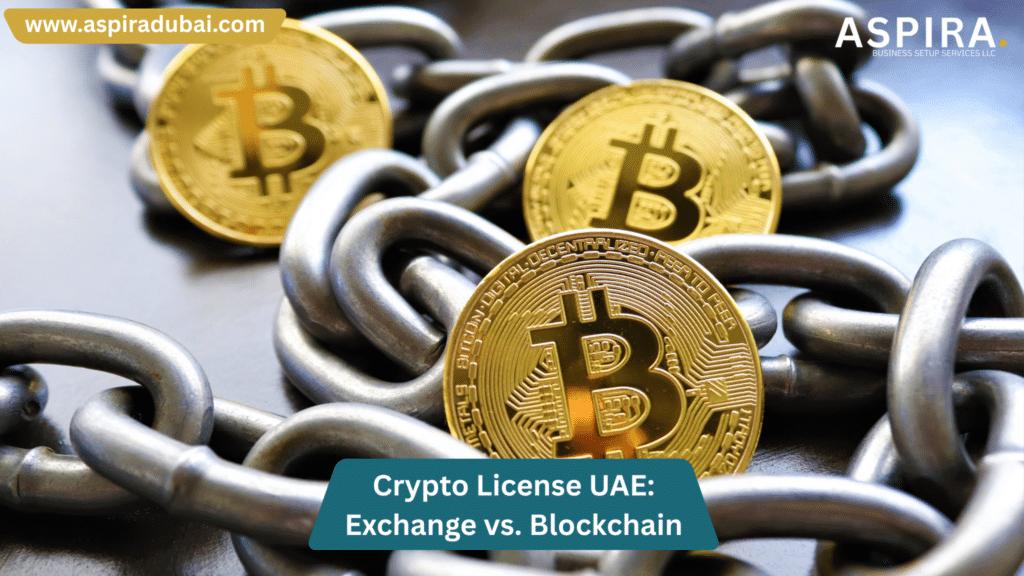
Getting a crypto license in the UAE is one of the first and most consequential decisions any digital asset founder will make. But not all crypto licenses are the same. A crypto license UAE authorities issue for a public exchange looks nothing like the license required for a blockchain startup building smart contracts or NFT platforms. Confusing the two paths is one of the most expensive mistakes founders make when entering this market.
This guide breaks down exactly what a crypto license in UAE involves for both exchange operators and blockchain developers covering regulators, costs, free zones, and timelines so you can choose the right path from day one.
Why the UAE Is a Global Hub for Crypto License Applicants
The UAE has become one of the most attractive jurisdictions in the world for anyone seeking a crypto license UAE regulators will actually approve quickly and transparently.
Tax benefits. Most free zone companies holding a crypto license UAE authorities have licensed pay 0% personal income tax and, in many cases, 0% corporate tax on qualifying income a major advantage during the capital-intensive early stages of building an exchange or blockchain product.
Global exposure. Dubai and Abu Dhabi host dense concentrations of venture capital firms and family offices actively seeking crypto and blockchain investment opportunities, giving license holders direct access to funding without relocating.
Purpose-built regulation. The UAE didn’t retrofit old rules for crypto it built dedicated regulators. The Virtual Assets Regulatory Authority (VARA) governs Dubai, the Financial Services Regulatory Authority (FSRA) oversees Abu Dhabi Global Market (ADGM), the Dubai Financial Services Authority (DFSA) regulates the Dubai International Financial Centre (DIFC), and the Securities and Commodities Authority (SCA) supervises crypto activity across mainland UAE and several other free zones each representing a different route to a crypto license UAE founders can build on.
Government-backed infrastructure. From DMCC’s dedicated Crypto Centre to RAK DAO’s purpose-built structure for digital asset development, applicants seeking a crypto license UAE benefit from infrastructure specifically designed around this industry.
Getting a Crypto Exchange License in the UAE
Licensing Authorities for a Crypto Exchange License
Where you apply for your crypto exchange license depends on your business activity and target jurisdiction:
- VARA (Dubai): The primary authority for a crypto license UAE exchanges based in Dubai need covering crypto-to-crypto, crypto-to-fiat, OTC, and peer-to-peer trading, plus custodial and brokerage services.
- ADGM (Abu Dhabi): The FSRA issues a crypto license UAE founders can use covering exchange operations, storage, buying and selling, third-party asset management, and marketing of virtual assets.
- DIFC: The DFSA offers an alternative financial free zone route for a regulated crypto license UAE exchanges can operate under, outside VARA’s direct jurisdiction.
- SCA (Mainland and select free zones): Since VARA only covers Dubai, a mainland company seeking a crypto license UAE-wide for exchange activity outside Dubai must apply through the SCA instead. This route is required for activities like crypto ATMs or any business dealing directly with the public outside a free zone.
- DMCC (via SCA cooperation): Through an MoU with the SCA, DMCC offers a crypto license UAE founders can obtain covering proprietary trading and related services, with the SCA supervising compliance.
Requirements for a Crypto Exchange License
- Minimum capital requirement: This is where crypto license UAE costs vary most. DMCC’s Crypto Trading License (proprietary trading only, no public exchange) requires a minimum share capital of AED 50,000. Its Distributed Ledger Technology (DLT) Services License, covering broader blockchain and database solutions, requires AED 500,000 in minimum share capital. A full VARA-regulated crypto license for public exchange and custodial services can require capital commitments running into millions of AED, depending on scope.
- Compliance team: Mandatory AML and KYC systems, typically with a dedicated compliance officer.
- Cybersecurity measures: High-level IT security protocols, often requiring third-party audits before your crypto license UAE application is approved.
- Regulatory submission: A detailed business plan, internal policies, and financial projections.
Types of Crypto Exchange Licenses
- Virtual Asset Exchange License – for platforms facilitating public trading of digital assets
- Crypto Brokerage License – for businesses trading on behalf of clients
- Crypto Trading License (Proprietary) – for companies trading only with their own capital
Key Challenges of Getting a Crypto Exchange License
- High setup and ongoing compliance costs
- Continuous regulatory audits
- Limited approval likelihood for founders without financial services experience
- 3 to 6 months from application to full approval
Getting a Blockchain License in the UAE
A blockchain license is a very different animal from a crypto license UAE exchange operators need faster, cheaper, and far less regulated.
Licensing Authorities for a Blockchain License
- DMCC, IFZA, RAK DAO, DSO: The most popular free zones for a blockchain focused license. RAK DAO was purpose-built to support digital asset development, making it a natural fit for founders who don’t need financial regulator oversight.
- DAFZA and DIFC: Additional options for a blockchain license with a more established free zone address.
- Mainland (DET-regulated): The Dubai Department of Economy and Tourism (DET) regulates and issues a blockchain license for companies operating on the Dubai mainland possible, but less common than free zone setups.
Requirements for a Blockchain License
- Standard business license: Registered as a technology or software development company rather than a financial entity.
- No financial regulator approval needed: A blockchain license for smart contracts, NFT platforms, or supply chain solutions generally doesn’t require VARA, FSRA, or SCA approval, provided the business doesn’t directly handle customer funds.
- Operational flexibility: A blockchain license lets founders pivot between NFTs, Web3 applications, and enterprise blockchain solutions without restructuring.
- Capital requirements: An entry-level crypto license UAE founders can get through IFZA or DMCC can start from AED 30,000, though DMCC’s DLT Services License requires AED 500,000 if scope extends into broader blockchain infrastructure.
Types of Blockchain Licenses
- Blockchain Development License covers software development and smart contract creation
- Distributed Ledger Technology (DLT) Services License for broader blockchain infrastructure, available through DMCC
Key Advantages of a Blockchain License
- Lower barrier to entry than a crypto exchange license
- Faster approval often 2 to 4 weeks
- Minimal ongoing compliance compared to exchange licensing
Step-by-Step Process to Get a Crypto License in the UAE
Regardless of whether you’re pursuing a crypto exchange license or a blockchain license, the application process follows a similar structural path, though the depth of each step differs significantly.
Step 1: Define your business activity. Before approaching any regulator or free zone, clearly define whether your business will handle customer funds, facilitate trading, or purely provide technology and development services. This single decision determines your entire crypto license UAE application path misclassifying your activity at this stage is the most common reason applications get delayed or rejected outright.
Step 2: Choose your jurisdiction. Choosing the right crypto license UAE jurisdiction starts with selecting between VARA (Dubai), FSRA (ADGM), DFSA (DIFC), or SCA (mainland and select free zones) for exchange activity. For a blockchain license, options widen considerably to include DMCC, IFZA, RAK DAO, DSO, DAFZA, or DET for mainland setup.
Step 3: Prepare your documentation. Exchange applicants need a comprehensive business plan, AML/KYC policy documentation, financial projections, and often a cybersecurity audit report. Blockchain applicants typically need a simpler business plan focused on their technology offering, along with standard incorporation documents.
Step 4: Submit your capital requirement. Deposit or demonstrate the minimum share capital required for your specific crypto license UAE category ranging from AED 30,000 for entry-level blockchain licenses up to several million AED for full exchange licenses.
Step 5: Undergo regulatory review. Exchange applications go through detailed regulator review, which may include interviews, additional documentation requests, and compliance verification. Blockchain applications generally move through standard free zone company registration, which is significantly faster.
Step 6: Receive approval and launch. Once approved, exchange operators must maintain ongoing compliance reporting, while blockchain companies can typically begin operations immediately after registration completes.
Comparing the Top Free Zones for a Crypto License in UAE
Not all free zones are equal when it comes to crypto and blockchain licensing. Here’s a closer look at the jurisdictions founders consider most often when comparing crypto license UAE options.

DMCC (Dubai Multi Commodities Centre). DMCC is one of the most established destinations for a crypto license UAE founders can obtain, operating a dedicated Crypto Centre and, through its cooperation agreement with the SCA, offering licenses covering both proprietary crypto trading and blockchain development. It’s a strong option for founders wanting a recognized address alongside flexibility across trading and technology activities. DMCC’s Crypto Trading License requires AED 50,000 in minimum share capital, while its more comprehensive DLT Services License requires AED 500,000.
IFZA (International Free Zone Authority). IFZA has built a reputation as one of the most cost-effective routes to a crypto license UAE founders use for blockchain consultancy and advisory setups, with entry-level packages starting around AED 30,000. It’s a strong choice for founders prioritizing speed and affordability over the specific perks of a more established zone like DMCC.
RAK DAO (Ras Al Khaimah Digital Assets Oasis). RAK DAO was purpose-built specifically to support digital asset development, making it one of the most tailored environments in the UAE for blockchain startups. Unlike general-purpose free zones that added crypto activities as an afterthought, RAK DAO’s entire structure from its regulatory approach to its business support services was designed around blockchain and digital asset companies from inception.
ADGM (Abu Dhabi Global Market). For founders specifically pursuing a crypto license UAE regulators recognize for full financial services scope, ADGM offers one of the most comprehensive regulatory frameworks through the FSRA, covering everything from exchange operations to third-party asset management and marketing of crypto assets.
DIFC (Dubai International Financial Centre). DIFC provides an alternative financial free zone for exchange licensing through the DFSA, appealing to founders who want a financial-sector-specific environment distinct from VARA’s Dubai-wide jurisdiction.
DAFZA (Dubai Airport Free Zone). While less commonly associated with crypto specifically, DAFZA offers blockchain-friendly licensing options for founders wanting an alternative to DMCC or IFZA, particularly those with existing logistics or trade-focused operations who want to add blockchain capabilities under the same umbrella.
Common Mistakes Founders Make When Applying for a Crypto License
Assuming one license covers everything. Many founders discover mid-application that their business activity spans both blockchain development and elements of exchange or custodial service requiring two separate licenses or a costly restructuring of their original crypto license UAE application.
Underestimating compliance timelines. Exchange applicants frequently underestimate how long AML/KYC system development and regulatory review actually takes, leading to cash flow problems while waiting for approval.
Choosing a free zone based on cost alone. While IFZA’s lower entry cost is attractive, founders building toward an eventual exchange license often find that starting in DMCC or RAK DAO despite higher initial costs saves significant restructuring expense later.
Overlooking mainland options entirely. Some founders assume free zones are always the better choice for a crypto license UAE setup, without realizing DET-regulated mainland blockchain licenses can offer advantages for companies specifically targeting UAE government or enterprise clients who prefer working with mainland-registered entities.
What Happens After You Get Your Crypto License
Getting your crypto license approved is the beginning of your compliance journey, not the end of it particularly for exchange operators.
Exchange license holders must maintain ongoing AML/KYC monitoring, submit periodic compliance reports to their regulator, and often undergo annual cybersecurity audits. Failure to maintain these standards can result in license suspension or revocation, making it critical to budget for ongoing compliance costs, not just the initial setup fee.
Blockchain license holders face substantially lighter ongoing obligations typically limited to standard free zone company renewal requirements, annual license fees, and basic financial reporting, without the extensive compliance monitoring exchange operators must maintain.
Crypto License UAE: Exchange vs. Blockchain Comparison
| Aspect | Crypto Exchange License | Blockchain License |
|---|---|---|
| Regulator | VARA, FSRA, DFSA, or SCA | Free zone authority (DMCC, IFZA, RAK DAO); DET for mainland |
| Capital Requirement | AED 50,000 to millions | AED 30,000 to AED 500,000 |
| Compliance | Strict AML/KYC, audits | Minimal |
| Setup Time | 3 to 6 months | 2 to 4 weeks |
| Scope | Trading, brokerage, custody | Apps, Web3, NFTs, DLT |

Which Crypto License Should You Choose?
If your goal is running an exchange, wallet service, or custodial platform, prepare for a longer timeline and higher capital commitment but this crypto license path carries the highest revenue ceiling.
If you’re focused on blockchain innovation Web3, NFTs, smart contracts a blockchain license offers a faster, cheaper route with far less regulatory friction.
Future Outlook: Crypto and Blockchain Licensing Trends in the UAE
The UAE’s regulatory approach to crypto and blockchain licensing continues to mature, and founders seeking a crypto license UAE authorities will approve in 2026 are operating in a considerably more structured environment than those who launched just a few years ago. VARA has steadily expanded its rulebook since its establishment, adding clearer guidance around stablecoins, custody arrangements, and marketing standards for virtual asset service providers. This ongoing refinement means exchange applicants today face more predictable though not necessarily faster approval timelines than early entrants did.
On the blockchain side, the trend has moved firmly toward specialization. RAK DAO’s emergence as a purpose-built digital asset zone reflects a broader shift: rather than treating blockchain companies as a subset of generic technology licensing, UAE free zones are increasingly building dedicated infrastructure, business support services, and regulatory clarity specifically around this sector. DMCC’s continued investment in its Crypto Centre follows the same logic, positioning itself as a long term ecosystem rather than simply another free zone offering a crypto license UAE applicants add on as an afterthought.
For founders, this specialization trend carries a practical implication: the free zone you choose increasingly shapes not just your licensing cost and timeline, but your access to sector specific networking, investor introductions, and peer companies working on similar problems. A blockchain startup registered in RAK DAO or DMCC’s Crypto Centre benefits from proximity to an active ecosystem in a way that a generic mainland technology license simply cannot replicate.
Capital requirements are also likely to remain a key differentiator for anyone comparing crypto license UAE options going forward. As VARA and other regulators continue refining their frameworks, exchange-level capital requirements are unlikely to decrease if anything, growing regulatory sophistication tends to raise the bar for market entry as authorities prioritize consumer protection and systemic stability. Blockchain licensing, by contrast, is likely to remain comparatively accessible, since the underlying activities don’t carry the same systemic risk profile that justifies heavier capital and compliance requirements for exchanges.
For founders weighing a crypto license UAE regulators will recognize as fully compliant, the practical takeaway is this: the gap between exchange licensing and blockchain licensing isn’t narrowing it’s becoming more clearly defined as both regulatory frameworks and free zone ecosystems mature. Understanding exactly where your business activity falls within this landscape remains the single most important decision in the entire setup process.
Frequently Asked Questions
1. Do I need VARA approval for a blockchain license?
No. VARA approval is only required for a crypto exchange license covering trading, brokerage, or custodial activity. A blockchain license for technology solutions doesn’t need VARA involvement.
2. How much does a crypto license in UAE cost?
It depends on the type. A DMCC proprietary trading crypto license starts at AED 50,000 minimum share capital, while a full VARA exchange license can run into millions of AED.
3. Can a blockchain license be upgraded to a crypto exchange license later?
Yes — many founders start with a blockchain license, then apply for VARA, FSRA, or SCA approval once ready to add exchange functionality. This requires restructuring and additional capital.
4. Which free zone is best for a blockchain license?
DMCC, IFZA, and RAK DAO are most popular. RAK DAO was built specifically for digital asset development.
5. How long does a crypto exchange license take to get?
Typically 3 to 6 months, depending on the regulator (VARA, FSRA, DFSA, or SCA).
6. Can I get a blockchain license on the UAE mainland?
Yes — DET regulates mainland blockchain licenses, though most founders prefer free zones for ownership and cost advantages.
How Aspira Business Setup Services Can Help
Whether you need a crypto exchange license through VARA or a fast-track blockchain license through DMCC, IFZA, or RAK DAO, Aspira guides you through every step from activity assessment to license application and compliance setup.
📞 +971 56 406 6546
✉️ info@aspiradubai.com
🌐 www.aspiradubai.com